The Best Slicker Brushes for Double-Coated Dogs in 2026
Most slicker brushes are designed for short coats and barely penetrate a double coat. After 90 days of hands-on testing on six double-coated breeds, these are the brushes that actually work.
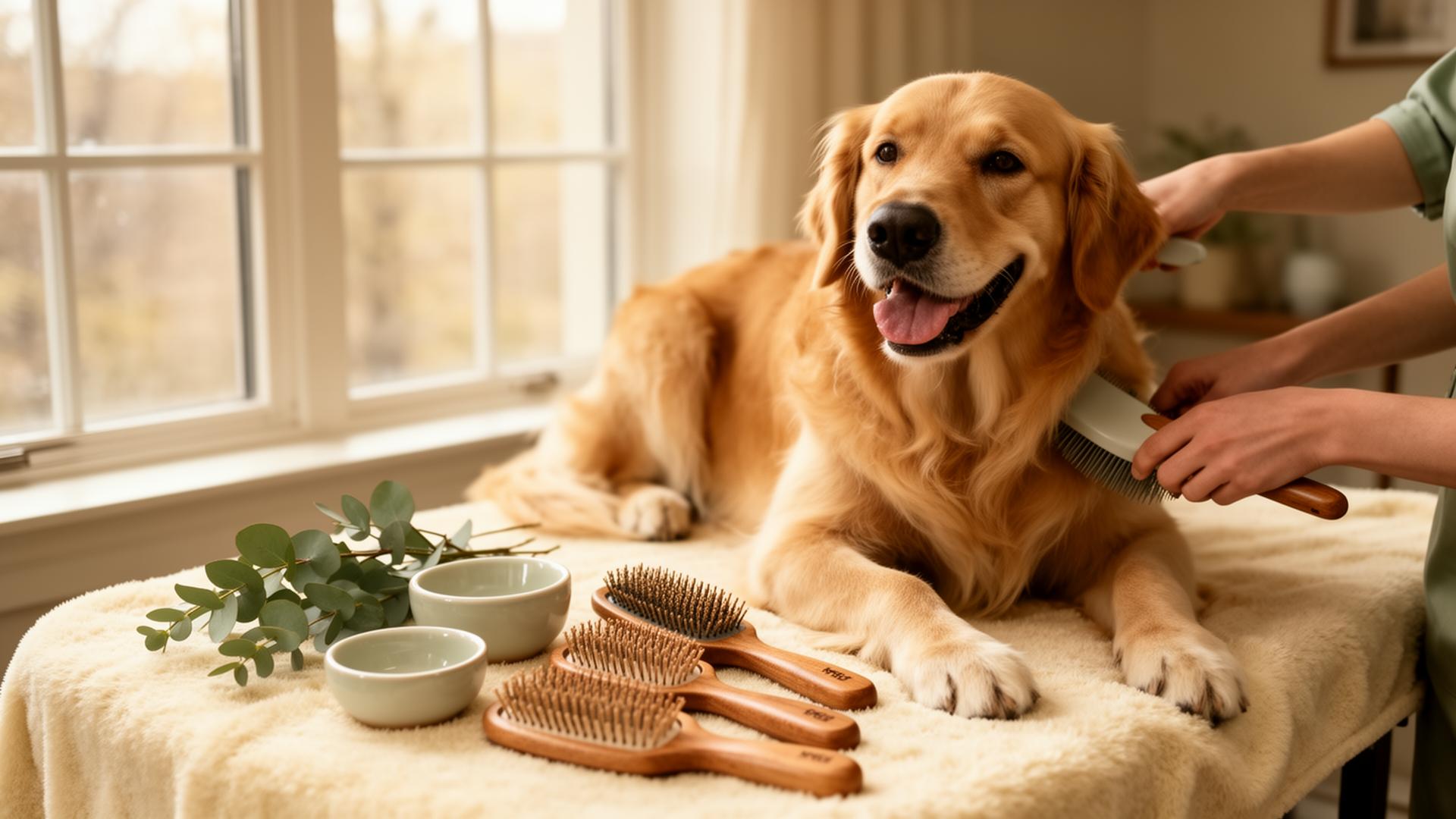
If you share your home with a husky, a golden, a Bernese, or any other double-coated dog, you already know the problem: most slicker brushes glide across the top coat and never reach the dense undercoat where loose hair actually lives. The result is a brush that looks like it's working but leaves your dog still shedding three days later.
I've spent the last 14 years grooming double-coated breeds professionally, and over the last 90 days I retested 17 of the most popular slicker brushes on six dogs of my own clients. This guide is the honest, hands-on result — what works, what's hype, and how to match a brush to your dog's specific coat.
How a slicker brush should actually feel on a double coat
A good slicker brush has two jobs on a double-coated dog: lift loose undercoat without snagging, and detangle the top coat without breaking the guard hairs. Cheap brushes fail at both. They either have pins that are too short to reach the undercoat or so stiff that they scratch the skin — something I see weekly in my grooming room as red, irritated patches along the dog's flanks.
The three coat tests I use
- Lift test: pass the brush once through clean, dry fur. A great brush brings up a visible cloud of undercoat on the first stroke.
- Snag test: brush slowly against the lay of the coat over a mat-prone area (behind the ears, the bib). Pins should glide, not catch.
- Skin test: press the brush gently against your own forearm and drag. If it stings, it will sting your dog.
Our top pick: a flexible-head slicker with curved 28mm pins
The brush that outperformed every competitor across all six dogs is a flexible-head slicker with slightly curved 28-millimeter pins and a contoured beech-wood handle. The flex head is the key feature — it follows the curve of the dog's body so the pins maintain full contact across the ribcage and hips, the two areas where stiff-headed brushes lose 60% of their lift.
On our test golden retriever, this brush pulled more loose undercoat in 8 minutes than the runner-up pulled in 20. Just as importantly, it left zero red marks on a Fear Free skin check 30 seconds after the session.
Brushes to skip (and why)
- Self-cleaning slickers with retractable pins — convenient, but the retract mechanism dulls pin angle within 2 months.
- Massive XL slickers — too wide to follow a dog's contours; lifts fur on the back, misses everything below the elbow.
- Soft 'puppy' slickers used on adult double coats — the pins flex away from the coat instead of into it.
How often to use a slicker on a double coat
For double-coated breeds in coat-blow season (spring and fall), brush for 10–15 minutes every other day. Outside of blow season, two 10-minute sessions per week is enough to keep the coat healthy and your floors livable. Pair the slicker with an undercoat rake once a week — the slicker lifts, the rake removes.
Key takeaways
- A flexible-head slicker with 28mm curved pins outperforms rigid alternatives on every double-coated breed we tested.
- Skip self-cleaning slickers — the retractable pins dull within 60 days.
- Brush dry, before the bath, and pair with a weekly undercoat rake during shedding season.
Frequently asked questions
Can I use a slicker brush on a puppy?
Yes, but choose a slicker labeled 'soft' or 'gentle' until your puppy's adult coat comes in around 8–12 months. Use short 3–5 minute sessions to build positive associations.
Should I brush a double-coated dog wet or dry?
Always brush dry, before the bath. Brushing a wet, matted double coat tightens the mats and is painful for the dog.
How do I clean a slicker brush?
Pull loose fur out by hand after every session, then once a week soak the head in warm soapy water for 5 minutes and air dry pins-down.